
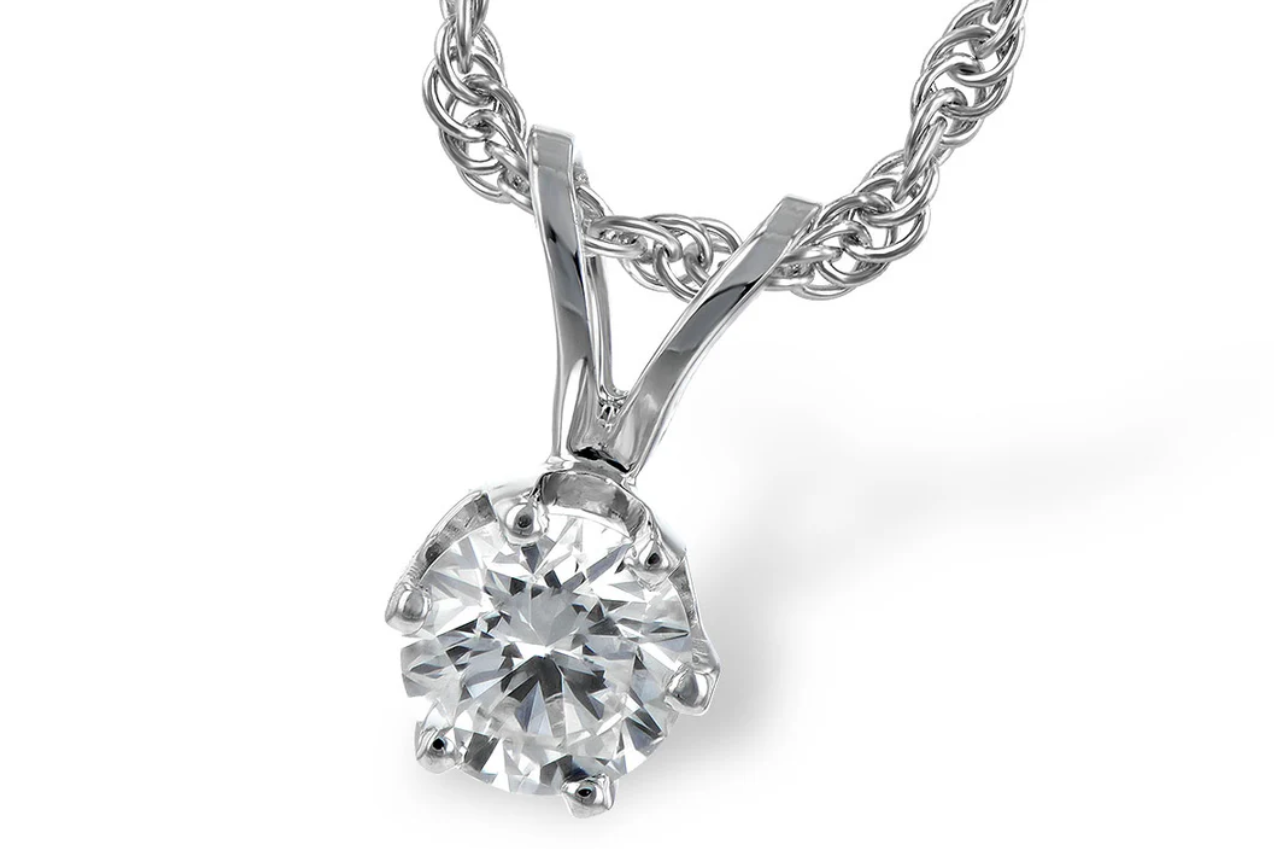
Jewellery trends may shift, but some pieces remain quietly constant. They adapt rather than disappear, changing in proportion, setting or styling while keeping their essential appeal. Pendants sit firmly in this category. Worn close to the body and often chosen for daily wear, they tend to become part of routine rather than reserved for special occasions.
Within this enduring space, diamond pendants continue to hold a distinctive position. Their appeal is not driven by excess or ceremony, but by clarity, balance and familiarity. A diamond pendant rarely feels out of place. Instead, it settles naturally into everyday life, offering quiet presence rather than overt display.
This longevity reflects how jewellery is increasingly chosen and worn.
Jewellery designed to be lived with
Pendants are among the most personal pieces of jewellery. They move with the wearer, rest against the skin and are often worn without much thought once they feel right. Because of this, comfort and proportion matter as much as visual impact.
Diamond pendants tend to suit this role well. Their sparkle is visible, but contained. When well designed, the stone catches light gently as the wearer moves, adding brightness without distraction. The pendant becomes part of the wearer’s rhythm rather than something that competes for attention.
This ease is a key reason diamond pendants remain so widely worn.
A refined relationship with sparkle
There has been a gradual shift away from jewellery chosen purely for dramatic effect. Many people now prefer pieces that reveal themselves slowly, rewarding familiarity rather than demanding notice.
Diamond pendants offer this kind of experience. Instead of a constant flash, the stone responds to movement and light changes, creating a subtle play of brilliance. This measured sparkle feels particularly appropriate for jewellery worn daily, where restraint often feels more elegant than intensity.
Over time, this softness becomes part of the pendant’s character.
Simplicity that allows meaning to develop
Diamond pendants are often defined by simplicity. A single stone, a clean setting, a fine chain. This minimal structure leaves space for personal meaning to develop.
Without overt design cues, the pendant becomes what the wearer makes of it. It may mark a milestone, be worn every day without conscious thought, or sit quietly alongside other jewellery. The design does not dictate how it should be worn.
This openness is part of what allows diamond pendants to remain relevant across generations.
Versatility across styles and moments
One of the enduring strengths of a diamond pendant is adaptability. It moves easily between different settings and styles without needing to change.
Worn alone, it feels composed and intentional. Layered with other necklaces, it adds light and balance without overwhelming the overall look. This versatility allows the piece to evolve with changing tastes rather than becoming fixed to a particular aesthetic.
As wardrobes and lifestyles change, the pendant continues to fit.
Modern materials and informed choices
As jewellery buyers become more informed, attention has increasingly turned to materials and sourcing. Choices are often guided by understanding rather than assumption.
Lab grown diamonds have become part of this conversation, offering the same physical and optical properties as mined diamonds while aligning with modern expectations around transparency and consistency. In pendant jewellery, where regular wear is expected, this consistency supports durability and confidence.
The appeal lies not in comparison, but in suitability. The material aligns with how the jewellery is intended to be worn.
Proportion as the foundation of design
Successful pendant design depends heavily on proportion. A stone that is too large can feel heavy, while one that is too small may lack presence.
Diamonds offer brightness that supports refined proportions. This allows pendants to remain light and comfortable while still visually clear. The result is jewellery that feels balanced rather than intrusive.
This balance often determines whether a pendant becomes part of daily rotation or remains unworn.
Jewellery that becomes familiar over time
The jewellery people value most is often the jewellery they reach for instinctively. Pieces that integrate seamlessly into routine tend to gather meaning quietly, through repetition rather than ceremony.
Diamond pendants frequently become this kind of companion. Their presence is noticed, but not announced. Over time, they become associated with everyday moments rather than singular events.
This familiarity is what gives them lasting emotional resonance.
Longevity beyond trend cycles
While jewellery styles evolve, certain principles endure. Balance, clarity and wearability tend to outlast decorative trends.
Diamond pendants align naturally with these principles. Their appeal is not tied to a particular era or fashion moment. Instead, it rests on how comfortably they fit into daily life.
As tastes change, such pieces rarely feel dated. They adapt quietly, remaining relevant through use rather than reinvention.
A reflection of modern jewellery values
Modern jewellery choices are increasingly shaped by intention. People look for pieces that feel authentic, adaptable and suited to real life.
Diamond pendants reflect this shift. They offer brightness without excess, simplicity without emptiness and elegance without formality. Their continued presence is not driven by trend, but by relevance.
In a jewellery landscape that values longevity and everyday wear, the diamond pendant remains a constant. Not because it demands attention, but because it earns it, slowly and consistently, over time.
