
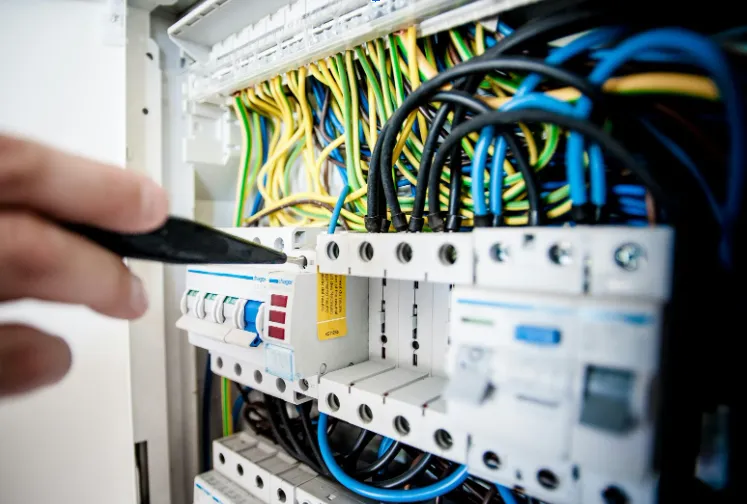
How often do you think about your electrical panel? Probably not much—until something suddenly stops working. You’re toasting bread, the microwave’s humming, and then… total silence. Power’s out in half the house, and now you’re heading to that gray metal box you never gave a second thought to.
That’s your electrical panel. This may not be immediately apparent, but it is one of the most important components in your home. It keeps your electricity system safe and running smoothly.
What is an Electrical Panel?
Imagine it as the electrical control panel for your home. The external utility line supplies electricity and enters the panel, which then distributes power to smaller branches, known as circuits, that lead to all outlets, lights, and equipment in your home.
There are circuit breakers inside the panel, which act like a traffic police. When too much current flows through a line, the breaker flips off to stop it, preventing its wiring from overheating or catching fire.
You will usually find panels in the basement, garage, or a hallway closet. It may not be attractive, but it is doing a significant job behind the scenes.
How Circuit Breakers Keep You and Your Home Safe
Breakers are designed to “trip” when there’s trouble. It’s their method of avoiding danger before it’s serious. That could entail cutting power to an individual circuit when it’s overloaded or responding to a short.
Overloaded Circuits
This is one of the most common reasons a breaker trips. If you plug multiple devices, such as a space heater, phone charger, and hair dryer, into the same outlet at once, the circuit becomes overwhelmed. To avoid overheating, the breaker shuts it off.
Short Circuits
These happen when a hot wire touches another wire it shouldn’t. It causes a sudden spike in current. When this occurs, the breaker acts fast to cut power and reduce the risk of fire.
Ground Faults
A ground fault occurs when a hot wire comes into contact with a grounded object, such as a metal box or water pipe. It is dangerous, especially near the water, so the breaker immediately cuts it down.
Know Your Breakers: Types You Might Have at Home
Not all breakers do the same thing. Here’s a quick breakdown of the ones most homeowners come across:
- Single-Pole Breakers. These are the slim ones you’ll see most often. They usually handle lighting, wall outlets, and smaller appliances.
- Double-Pole Breakers. These are wider and designed for high-energy equipment, such as water heaters, stoves, and dryers. They carry 240 volts and handle more current.
- GFCI Breakers (Ground Fault Circuit Interrupters). These are essential in areas where electricity and water may mix—such as kitchens, bathrooms, and garages. They cut power at the first hint of trouble.
- AFCI Breakers (Arc Fault Circuit Interrupters). Mandated by newer codes, these devices will sense electrical arcs—minuscule sparks caused by loose or frayed wires—and turn off the circuit before a fire can ignite.
What’s Inside Your Electrical Panel?
When you turn the door, here’s what you’ll typically see:
- Main Breaker. This switch regulates the power flow for the whole house. Flip this, and your whole home powers down.
- Branch Circuit Breakers. These are individual switches that regulate power to different areas or systems within your home.
- Labels. Ideally, there should be a diagram or list indicating what each breaker controls. If your panel isn’t labeled, it’s worth the effort to label it—or better still, get a licensed electrician to label it correctly.
Knowing what the breaker switches to will save the precious minutes in an emergency—or just assist you in locating the correct switch when you’re attempting to repair a blown fuse while cooking dinner.
When Should You Be Concerned?
Just as your roof, HVAC system, plumbing, and electrical panels can grow old and may cause issues. These are indicators that it might need servicing:
- Breakers trip frequently, without a clear cause
- The panel smells like burning plastic
- You hear strange buzzing or crackling sounds
- The panel is hot to the touch
- Your panel is more than 30 years old or rated below 100 amps
- You still have an outdated fuse box
The houses built for decades were not designed to carry contemporary electric loads. If you are considering installing a home office, EV charger, or Central AC, then your existing system may not be tasked.
Tips for Staying Safe Around the Panel
Electricity is not to be underestimated. Here are some very simple safety precautions:
- Don’t overload outlets or circuits. Spread out high-use appliances.
- Keep the area around your panel clear. You don’t want to move a shelf or boxes during an emergency.
- Avoid DIY electrical fixes. No matter how handy you are, electrical work has risks. YouTube videos are no substitute for professional training.
- Never swap breakers without understanding capacity. Installing a higher-amp breaker without upgrading the wiring is a serious fire hazard.
And don’t forget, work with a reliable electrical contractor for your home or business. These experts are familiar with the code, know what to test, and can perform the upgrade safely.
Thinking About an Upgrade?
If you still have a 60-amp or 100-amp panel in your home, or if you are remodeling, it may be time to upgrade to a larger system. The 200-amp panel provides the ability to add features such as home offices, powerful equipment, or even solar panels.
The initial installation can range from $1,500 to $3,000, depending on your location and home size. This is not inexpensive, but it is a worthwhile investment in your safety and the value of your home. Buyers are thrilled to find an up-to-date electrical system that will not require immediate upgrade.
