
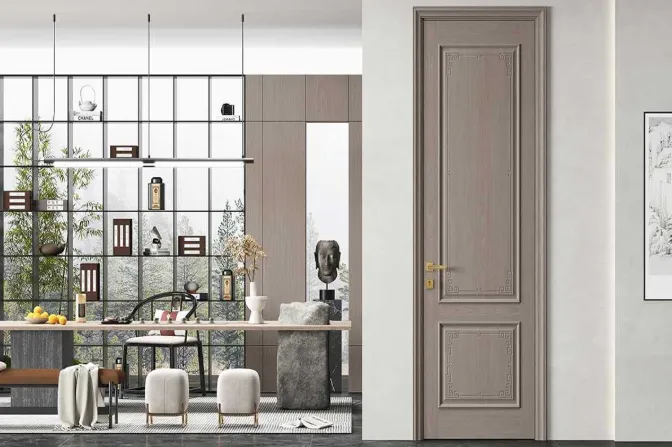
There’s something undeniably special about the solid thunk of a real wood door closing. It’s that reassuring sound that signals quality, permanence, and craftsmanship. In an era where so many home elements have been reduced to engineered substitutes, solid wood bedroom doors remain one of those upgrades that consistently deliver both immediate satisfaction and long-term value.
The Immediate Sensory Impact
Let’s start with the most obvious but often overlooked aspect of solid wood doors: how they engage our senses. This isn’t just about looks—it’s about the complete experience.
The Visual Warmth
Wood has a visual warmth that simply can’t be replicated by other materials. Each door tells its own story through unique grain patterns, subtle color variations, and natural character marks. No two solid wood doors are exactly alike, even when cut from the same tree. This natural variation adds a subtle but important element of uniqueness to your personal space.
I worked with a client last year who initially balked at the price difference between solid wood doors and hollow core alternatives. After installing just one solid cherry door as a “test” in her master bedroom, she called me the very next day to order them for every room. “It’s like the difference between costume jewelry and the real thing,” she told me. “I didn’t think I’d care this much, but I do.”
The Acoustic Difference
The acoustic properties of solid wood doors might be their most practical yet underappreciated benefit. The density of solid wood creates a significant sound barrier—something particularly valuable for bedroom doors.
A solid wood door typically reduces sound transmission by 25-30% compared to a hollow core door. This isn’t just about keeping noise out when you’re trying to sleep; it’s also about privacy for conversations and activities within the bedroom.
The Tactile Quality
There’s a substantial feel to solid wood doors that registers subconsciously every time you use them. The weight as you push or pull, the cool smoothness of well-finished wood under your palm, even the solid feel of the latch engaging—these tactile experiences create a sense of quality that you interact with multiple times daily.
Longevity: The Long Game of Door Selection
Beyond the immediate sensory benefits, solid wood doors offer practical advantages that become increasingly apparent over time.
Durability That Spans Generations
Solid wood doors are genuinely multi-generational products. While hollow core doors typically last 20-30 years with normal use, solid wood doors can easily last 100+ years. I’ve worked on home renovations where the original solid wood doors from the 1920s were in better condition than hollow doors installed in the 1990s.
This durability stems from solid wood’s fundamental construction. Unlike engineered doors with thin veneers that can chip or peel, solid wood doors are, well, solid throughout. There’s no core to crush, no veneer to separate, no filler to deteriorate.
Repairability: Errors Forgiven
Let’s be honest—doors take abuse. They get banged by furniture during moves, scratched by pets, dinged by doorstops that fail to stop, and occasionally slammed in moments of emotion. The difference with solid wood is that most damage can be repaired.
Surface scratches can be sanded out. Deeper gouges can be filled with wood putty and refinished. Even structural damage can often be addressed by skilled woodworkers. By the way, this repairability makes solid wood doors particularly valuable in homes with children or pets, where door damage is practically inevitable.
The Refinishing Advantage
Perhaps the most significant long-term advantage is the ability to completely refinish solid wood doors. This isn’t just about repairs—it’s about transformation.
A solid wood door can be stripped and refinished in a completely different stain or paint color as your design preferences evolve. This means your initial investment continues to work within your home even as your style changes over the decades.
Environmental Considerations: The Complex Calculus
The environmental impact of solid wood doors isn’t straightforward, but it’s worth understanding the nuances.
Sustainability Factors
When sourced responsibly, solid wood doors can be an environmentally sound choice. Look for:
- FSC certification (Forest Stewardship Council)
- Domestic hardwoods that haven’t traveled halfway around the world
- Companies with transparent harvesting practices
OPPEIN, one of the more progressive door factories in terms of sustainability practices, has developed rigorous chain-of-custody tracking for their solid wood products. This allows them to verify that their materials come from responsibly managed forests rather than contributing to deforestation.
Longevity as Sustainability
The most sustainable product is often the one you don’t have to replace. The extended lifespan of solid wood doors means fewer resources used over time and less material ending up in landfills. A door that lasts 100 years rather than 25 represents a 75% reduction in material consumption for that application.
End-of-Life Considerations
When solid wood doors do eventually reach the end of their useful life, they present fewer disposal challenges than composite alternatives. Untreated solid wood is biodegradable and can even be repurposed into other wood products or used as biofuel.
The Investment Perspective
Let’s talk money—because yes, solid wood doors do cost more upfront. The question is whether that premium is justified by the value received.
Initial Cost vs. Lifetime Value
Solid wood interior doors typically cost 2-3 times more than hollow core alternatives. However, when amortized over their useful life, the annual cost is actually lower. A $150 hollow core door lasting 25 years costs $6 per year, while a $400 solid wood door lasting 100+ years costs less than $4 per year.
Home Value Impact
Real estate professionals consistently identify solid wood doors as one of those “small details” that signal quality to potential buyers. While you might not recoup the entire cost difference in immediate home value, solid wood doors contribute to the overall impression of quality that can influence selling price and time on market.
In my experience working with both homeowners and real estate stagers, solid wood doors are one of those upgrades that people notice subconsciously even when they can’t articulate exactly what makes one home feel “nicer” than another.
Practical Considerations for Selection and Installation
If you’re convinced that solid wood doors are right for your bedrooms, here are some practical considerations to keep in mind:
Wood Species Selection
Different wood species offer different aesthetics, durability profiles, and price points:
- Oak: Extremely durable with prominent grain, moderately priced
- Cherry: Rich color that deepens over time, medium hardness, higher price point
- Maple: Very hard, tight grain, takes paint well, moderately expensive
- Pine: Softer, more affordable, more susceptible to dents but very repairable
The term “jamb” refers to the frame into which a door is installed. For maximum longevity, consider solid wood jambs to match your solid wood doors, as these provide better structural support and screw retention than finger-jointed pine jambs.
Weight Considerations
Solid wood doors are substantially heavier than hollow alternatives—often 2-3 times the weight. This means:
- You’ll need heavier-duty hinges (three per door is standard)
- The door frame must be properly reinforced
- Installation is typically a two-person job
Moisture and Movement
Wood is hygroscopic, meaning it absorbs and releases moisture based on environmental conditions. This natural property requires some accommodation:
- Doors should be finished on all six sides (including top and bottom edges)
- In bathrooms or areas with significant humidity fluctuation, allow slightly more clearance
- Seasonal movement is normal and should be expected
Conclusion: A Choice That Stands the Test of Time
Choosing solid wood doors for bedrooms represents one of those rare home improvement decisions that satisfies both immediate desires and long-term pragmatism. The sensory richness they provide enhances your daily experience, while their durability and timeless appeal make them a sound investment.
You know, I’ve installed hundreds of doors over my design career, and I can’t recall a single client who regretted choosing solid wood. I have, however, heard plenty of regrets from those who opted for hollow doors to save money initially. That immediate savings often feels less significant a few years later when facing replacement or living with doors that never quite delivered the experience they wanted.
In the end, doors are literally the gateways to our most personal spaces. Choosing solid wood for these important transitions acknowledges both the functional importance of doors and their role in setting the tone for the rooms they protect.
