
In the fast-paced environment of modern achievement, maintaining a high baseline of physical vitality is a constant challenge. Many individuals experience periods of diminished energy, often resulting from long bouts of sedentary work, disrupted sleep cycles, or general central nervous system (CNS) fatigue. These “low-energy states” are not just psychological; they are physiological deficits manifesting as decreased cognitive focus and reduced motivation.
Understanding how to navigate these periods without further overtaxing the body is a critical component of long-term wellness. The biological reality of energy management is rooted in metabolic efficiency. Forcing a depleted body into aggressive, high-intensity training can spike cortisol levels and lead to diminishing returns. Instead, the focus must shift toward structured, low-intensity engagement that actively recalibrates the system.
The Physiology of Energy Restoration: Active Recalibration
A common misconception is that energy restoration requires absolute stillness. In reality, scientifically speaking, restoration is not passive rest—it is active recalibration. When we engage in deliberate, low-intensity movement, several physiological mechanisms are triggered to restore vitality.
Initiating the Parasympathetic Shift
Gentle movement acts as a neurological trigger. It helps shift the autonomic nervous system from a sympathetic “fight or flight” state—often driven by daily stress and high cognitive loads—to a parasympathetic “rest and digest” state. This transition is essential for improving overall Heart Rate Variability (HRV) and signaling to the body that it is safe to begin the cellular recovery process.
Boosting Mitochondrial Efficiency
On a cellular level, restoration requires energy. Sustained, low-exertion activity stimulates mitochondrial biogenesis, which is the creation of new cellular “power plants.” Rather than depleting your reserves, this steady metabolic demand directly increases your baseline energy levels, making your body more efficient at producing and utilizing energy throughout the day.
Accelerating Metabolic Clearance
Furthermore, movement acts as a mechanical pump. Long periods of stagnation allow metabolic waste products to pool in the tissues, contributing to the feeling of lethargy. Low-intensity exercise increases capillary blood flow, effectively flushing out these byproducts while delivering oxygen-rich blood to fatigued muscles.
Low-Impact Movement as a Catalyst for Recovery
For those looking to restore their physical baseline, the logic of movement consistency is superior to that of intensity. High-impact exercises require significant neuromuscular recovery. A more sustainable approach utilizes movement patterns that facilitate circulation without generating additional systemic stress.
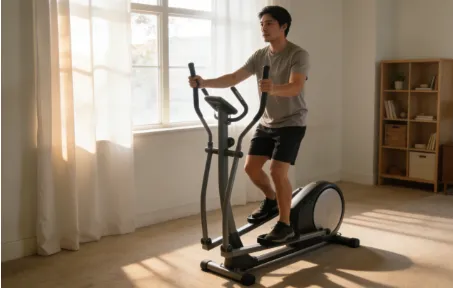
This is where a low impact elliptical workout serves as a scientifically backed restorative tool. By maintaining a steady, Zone 1 or Zone 2 heart rate on an elliptical, you stimulate the cardiovascular system without the jarring, repetitive impact forces of running. This fluid motion ensures continuous blood flow and joint lubrication without triggering the stress-hormone spikes associated with high-intensity interval training. It is the precise mechanical application of active recovery.
Environmental Psychology and Cognitive Load
Physical restoration is as much an environmental process as it is a biological one. The space in which we choose to rebuild our habits significantly influences our cognitive load. A cluttered or high-friction environment increases the mental energy required to begin a session—a phenomenon known as “decision fatigue,” which is often enough to derail a routine when baseline energy is already low.
For a sustainable home-based routine, the training environment should be streamlined. Utilizing a compact training setup that occupies approximately 0.2 square meters allows for a dedicated vitality zone without overwhelming the residential space. This spatial efficiency minimizes the psychological friction between the intent to move and the act of moving.
Material Integrity and Household Harmony
Just as the body requires a frictionless internal environment to restore energy, the external environment must also minimize resistance. Gear used in a residential setting must be unobtrusive—not only in terms of space but also sensory feedback.
This requirement for environmental harmony is reflected in the equipment from FED Fitness. By utilizing an eco-friendly PE material coating, the gear provides a stable, consistent tactile experience that is quiet and odorless. More importantly, it dampens mechanical sound. When navigating a low-energy state, the last thing the nervous system needs is jarring auditory stimuli. The combination of silent operation and material integrity provides a soothing, stable foundation for physical progression.
Habit Stacking for Long-Term Resilience
Building long-term physical resilience requires aligning your habits with your neurochemistry. When energy levels are low, the most effective strategy is “habit stacking”—pairing a short, 15-minute low-intensity session with an existing daily routine to bypass the need for high motivation.
This approach allows the body to adapt incrementally. By respecting the body’s internal recovery timelines and utilizing low-impact movement strategies, individuals can navigate periods of fatigue with greater physiological efficiency. The goal is to avoid the “boom and bust” cycle of over-exertion and forced recovery.
Conclusion: A Measurable Physiological Process
Energy restoration is a measurable physiological process, not a motivational slogan. Managing physical vitality requires a scientific understanding of how to align movement with your current autonomic state.
Whether you are incorporating a low impact elliptical workout to improve capillary density or optimizing your home environment to reduce cognitive friction, the objective is sustainable, biological resilience. By aligning your physical activity with the reality of your current physiological state, you ensure that your progress is steady, scientifically grounded, and profoundly effective.
