
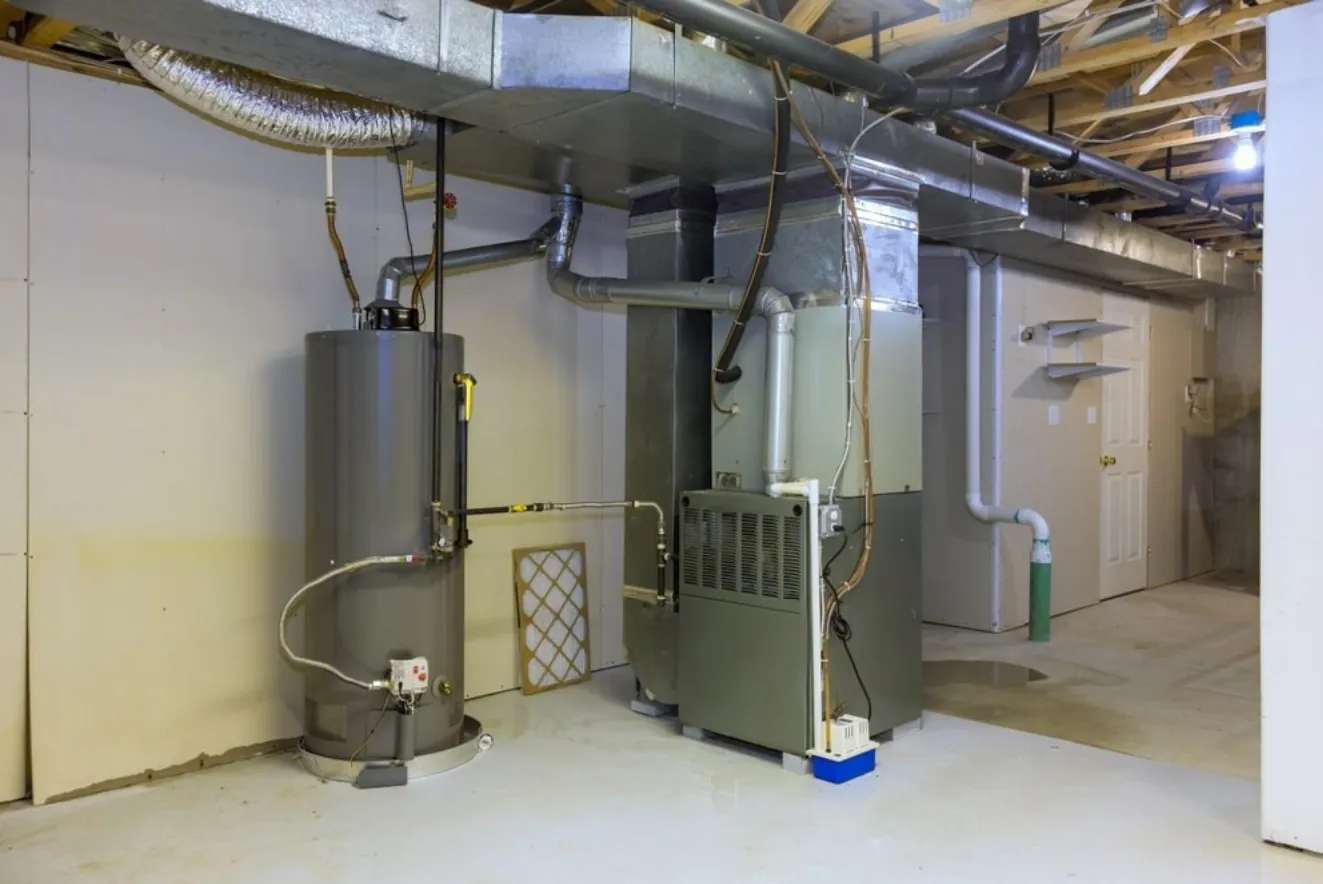
The dial gets nudged up on a cold morning. The dial gets nudged back down by dinner. The dial gets blamed either way. Meanwhile the thing actually failing sits in the utility closet, a 40-gallon gas tank in a 1990s split-level that has been quietly losing its ability to hold a steady temperature for about two years. If you are the adult child checking in on a parent who showers alone at seven in the morning, that swing is not a comfort complaint, it is a burn risk. Which is why the honest answer is usually a water heater install middletown ky plumbers can size and set properly, not a fifth trip to the knob.
The Dial Only Moves On A Dying Tank
Here is what happens inside that tank. Hard water leaves a layer of scale across the bottom of a gas heater, and the burner has to fire through it to reach the water above, so heat transfer gets slower every single year. The thermostat sits in a well against the side of the tank and reads one narrow band of that water, which is why it can call for heat while the top of the tank is still hot enough to hurt somebody. Turn it up and the first shower of the day scalds. Turn it down and the second shower runs out cold. The case we see most often is a tank between nine and thirteen years old with a burner working twice as hard as it did the week it was installed. Call it a twelve-year service life on a 40-gallon gas unit. Honestly, closer to nine or ten out here, because Oldham County water builds scale fast and almost nobody flushes a tank on schedule.
A thermostat that never settles is the tank asking to be replaced, not adjusted. A daughter in Crestwood called last winter because her father’s shower went cold about two minutes in, and a handyman had already swapped the thermostat out for her. The unit was thirteen years old. Nothing was wrong with the new thermostat, and nothing was ever going to be right about that tank.
Lukewarm Showers Follow A Pattern Around The House
Before anyone quotes you a unit, walk the house and write down where the water goes wrong. Hot at the kitchen sink and lukewarm at the farthest bathroom points to distance and heat loss in a long uninsulated run under a split-level floor. Cold only during the morning stretch, when a shower follows a dishwasher cycle, points at recovery, because the tank is refilling faster than the burner can catch up. Lukewarm all day at every fixture is a different animal. That is the thermostat, a failed element on an electric unit, or a cracked dip tube dumping cold supply water straight to the top of the tank where the hot outlet sits. Note which pattern matches, and note the time of day it shows up. That single page saves a diagnostic hour and tells whoever arrives whether you are buying a repair or a replacement.
Sizing is where the real decision lives. A water heater install Middletown KY homeowners keep for a decade starts with a first-hour rating and the household’s actual peak draw, not with whatever gallon number happened to be printed on the old tank. For a single resident who showers once a day, a smaller unit set correctly usually beats a bigger one, and it costs less to run for the rest of its life. Tankless comes up in most of these conversations, and it is a genuinely good answer for some houses, though not the drop-in swap people expect. I went back through the ENERGY STAR water heater guidance in March 2026, and the part homeowners tend to skip is what it says about conversions: going tankless changes both the gas load on the supply line and the venting path, so it takes a licensed professional to assess gas pipe sizing and install new venting matched to that unit’s BTU output and draft requirements. On a 1990s split-level, that can mean a larger gas line and a new vent penetration before the heater ever gets hung on the wall.
A Safe Setting Is Part Of The Install
Delivery temperature is the piece nobody sets on purpose, and with an older resident in the house it matters more than comfort does. Skin thins with age and burns faster at the same temperature, so water an adult in their forties calls hot can scald an 82-year-old in seconds. Never test water temperature with your hand, and never hold an arm or a foot under the tap to check it. Use a thermometer in a cup of running water instead. Stored water that sits too cool carries its own problem, since bacteria grow in a lukewarm tank, and that is why the professional answer is usually to store hotter and deliver cooler through a thermostatic mixing valve rather than to keep walking the tank setting down. That valve, and the thermostat setting itself, is licensed plumber work on gas and electric units alike, not a knob to experiment with on a Saturday afternoon. Whether a mixing valve is required on a replacement varies by state and by local code, so ask your plumber which rule applies where you live before you assume anything.
One more thing worth saying before install day, because a tank this far gone is running out the clock. If you find standing water around the heater or anywhere near the electrical panel, treat it as an electrical hazard first and a plumbing problem second: OSHA’s flood response guidance requires that power be shut off at the main service panel before anyone enters a flooded area, and nobody should touch electrical equipment sitting in water. Submerged equipment stays energized even after the puddle drains away. Get everyone clear, call the plumber, and if there is any question about the panel itself, call the utility before you go back in.
Chasing the dial feels like maintenance. It is really two years of arguing with a tank that stopped holding temperature. The version of this job that ends well starts with a sizing calculation, a delivery temperature that gets set and then verified with a thermometer at the fixture, and a unit matched to one household’s morning instead of to the last tank’s label. Get that right once and the water heater stops being a topic at the dinner table, which for the person doing the caregiving is worth more than the price gap between two models.
