
A couple in Amherst spread three quotes across their kitchen island last spring while their four year old tried to eat the corner of one. Two weeks of searching vinyl fence buffalo ny had produced a pile of company names, a low bid sitting $1,800 under the other two, and no clue what that gap bought. They wanted the kids and the beagle in the backyard without anyone standing at the door counting heads every ninety seconds. Not one of the three quotes explained why it cost what it cost.
Here is the argument, stated plainly. What separates a vinyl fence that still looks square in twenty years from one that bows by its third winter is the panel spec and the crew, not the price. Two bids can describe the same six foot privacy fence and mean different products. A handful of unglamorous questions is how you tell them apart.
Start With The Yard Problem Not The Panel
Before anyone measures anything, write down what the fence has to do. A play area for a preschooler and a dog needs a solid bottom rail, no climbable gaps, and a latch above a child’s reach. A fence meant to screen the neighbor’s boat needs height and coverage and nothing else. The case we see most often is a homeowner comparing panel styles before deciding what the yard is for. That is how three bids come back describing three different fences.
Slope matters more than people expect on the older ranch lots around Amherst, where a yard can drop a foot over forty feet. Vinyl panels are rigid, so a crew either steps them down the grade or racks them to follow it. That choice changes how the line reads from the patio. Ask which one they intend to do, and ask before you sign.
Vinyl Grades Explained Without The Jargon
Two vinyl privacy panels can look identical leaning against a showroom wall and still differ by half their material. The number that decides it is what installers call wall thickness, meaning how much vinyl sits in the rail before you reach hollow air. Thin walls flex in wind, and a rail that flexes through enough January gusts eventually keeps the bend. The listings from a vinyl fence buffalo ny search all recycle the same three or four style names, and a style name tells you nothing about the wall.
Snow is the other half of the story. A plow bank shoved against a fence line loads a panel in a way nobody puts on a quote, which is also why I lecture neighbors about driveway markers every winter. That is somebody else’s article. Back to the panel: thicker walls, posts below the frost line, and a solid bottom rail carry that load into April.
The Comparison Every Quote Should Survive
Line the bids up by the only figure that compares cleanly, which is installed cost per linear foot. Divide each total by the length of fence it covers and the ranking usually flips. Fence and exterior replacement is mainstream work rather than a luxury add on now, and CNBC’s reporting on remodeling demand noted that roughly 60% of existing U.S. homes were built in the 1980s or earlier, precisely the housing stock now cycling through new fences and railings. Not all of them are bidding the same fence.
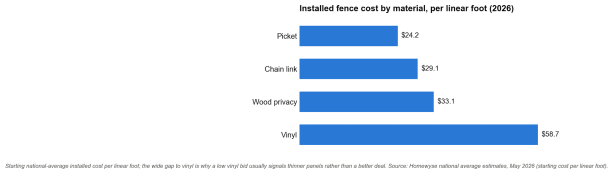
Vinyl starts well above wood and chain link, and that gap is the entire argument for it. Wood wants stain every few seasons plus replacement pickets after each ice storm, while vinyl wants a hose. Construction costs nationally have not been climbing sharply either, since Census Bureau construction spending figures showed May 2026 at $2,210.2 billion, about 1.5% below May 2025. So when one vinyl bid lands a third under the others, assume the savings came out of the product.
Questions That Expose A Weak Installer
Price is the easiest thing to ask about and the least useful thing to hear. These four questions get you further in ten minutes than a week of comparing bottom lines, because they force specifics instead of reassurance. A vague answer is itself an answer.
- What is the wall thickness of the rails and posts you are quoting me? A good answer is a measurement, not a brand adjective.
- How deep are the posts set, and how does that compare to the local frost line? A local crew should know the depth without looking it up.
- Who calls in the utility locates and pulls the permit? The answer should be them, and it should happen before the first hole.
- What exactly does the workmanship warranty cover, and who honors it in year four? Ask whether the same crew handles the repair call.
Nobody digs a post hole in your yard until the utility locates are marked. Call 811 first, every single time, and let the flags go in before the auger comes off the trailer. Any installer who shrugs at that has told you how the rest of the job will go.
Steps are where a fence job quietly turns into a safety job. If the fence line ties into a raised patio or a run of stairs into the yard, the railing beside those stairs is fall protection, not trim. A rail nobody can wrap a hand around will not stop a fall. OSHA’s walking working surfaces standard sets handrail height at 30 to 38 inches above the stair tread and requires that the rail actually be graspable. That is a workplace standard and residential rules vary by municipality, so ask your installer and your building department what applies to your steps.
Picking The Quote That Ages Well
The bid worth taking is rarely the cheapest and almost never the most expensive. It is the one that puts wall thickness, post depth, gate hardware, and warranty terms in writing, from a company that answers the phone in year five. The Amherst family landed a shade under $6,000 for a fenced play area with two gates, roughly $1,100 over that tempting low bid, and a gate tells on the installer within a year no matter which quote you pick. Theirs still swings level and latches on the first try. Ask the four questions, get the answers on paper, and the cheap quote stops looking like a bargain.
