
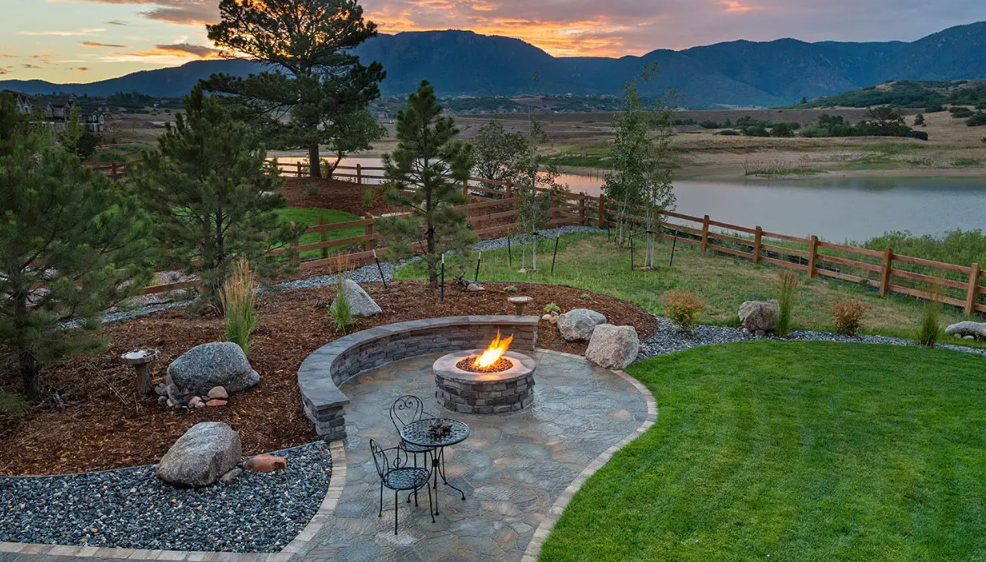
Every March it is the same trip to the same store. Every March it is the same forty bags of dyed bark riding home in the back of an SUV. Only the year printed on the receipt actually changes. If you bought a house in one of Monticello’s newer subdivisions, that receipt is probably the entire spring lawn plan. The beds still look tired by August, and the weeds come back anyway. Homeowners who go looking for mulch monticello il are usually shopping for a color, when the real decision is whether the soil underneath ever gets fed. Paying once for installed mulch and a soil-tested fertilization program costs about what a season of bag runs costs, and it ends the redo.
Cheap Bag Mulch Looks Free Until Spring
Bagged mulch is not cheap, it is just billed in small pieces. One two-cubic-foot bag covers roughly twelve square feet at a useful depth, so 400 square feet of beds swallows thirty bags. At four or five dollars a bag, that is real money spent before the wheelbarrow ever moves. Dyed bark then fades by the Fourth of July and takes your money with it.
Where The Yearly Redo Money Actually Goes
The redo is where most of a spring budget quietly disappears. Mulch settles and breaks down over a season, so beds laid in April look thin and gray by mid-July. That is when the second trip happens, and it is usually another ten bags. Then comes the weed preventer, because bark spread over compacted builder-grade clay stops very little on its own. Then a bag of all-purpose fertilizer, grabbed on the same trip and spread by guess. What we see most often on these lots is a homeowner who has spent close to three hundred dollars across three trips and still has beds that look untouched. None of it arrives as one big expense, which is exactly why it never gets counted.
It works like an overdraft fee on a checking account. Small enough to shrug at, charged again the moment attention slips, and never once fixing the balance that caused it. The bags treat the surface while the ground below stays hard, hungry and loaded with weed seed. Bark is a cover, not a correction, and a second layer does not change that. Mulch hides poor soil, but fertilizer is what changes it.
Fertilization Is The Line Item People Skip
A soil test is boring, and it is also the only way to know whether you are buying nitrogen the lawn does not need. University of Illinois Extension published spring lawn guidance in March 2026 recommending that turf-type tall fescue be mowed at three to four inches. That same guidance says to keep pets and children off a treated area until the spray has dried, and that one is not optional. Plenty of the people typing mulch Monticello IL into a phone in April want bark to fix what a custom blend would fix outright.
Hiring the work out carries paperwork worth knowing about. Illinois law says a home repair contract over $1,000 requires the contractor to hand you the state Home Repair Know Your Consumer Rights pamphlet before work starts. Ask for it, then read the part about written estimates.
One Season Of Real Numbers Compared
Line the two paths up for one spring on a quarter-acre lot with a budget under six hundred dollars. The do-it-yourself column is not invented, it is what the receipts total once the July trip is counted. The professional column costs more in March and less by September, because the redo is not in it.
Example scenario, one spring on a quarter-acre Monticello lot (illustrative costs, not a quote).
| Cost line item | DIY dyed bag mulch + store fertilizer | One-time pro mulch & fertilization program |
| Mulch materials | $150 | $210 |
| Delivery and spreading | $0 (your labor) | included |
| Fertilizer | $40 | $90 |
| Weed control / pre-emergent | $35 | $70 |
| Mid-season redo trips | $85 | $0 |
| Season total | $310 | $370 |
Sixty dollars separates those columns, and the left one also costs two Saturdays and a car that smells like bark. Change one assumption, say a bed that needs edging, and the gap closes or flips outright. Any landscaper handing you a flat number without walking the property is guessing at it.
Paying Once Beats Paying Every March
Money spent outside is not automatically money lost, though the return depends on what gets bought. Realtor.com, citing the 2025 Cost vs Value report, noted that a wood deck’s cost-recouped share climbed from 50 percent in 2023 to 83 percent in 2024. A yard that reads healthy does quieter work than a deck, and it does that work for less. Skip one spring of bag runs, put the same money into installed mulch and a program built on a soil test, and next March you get the Saturday back.
