
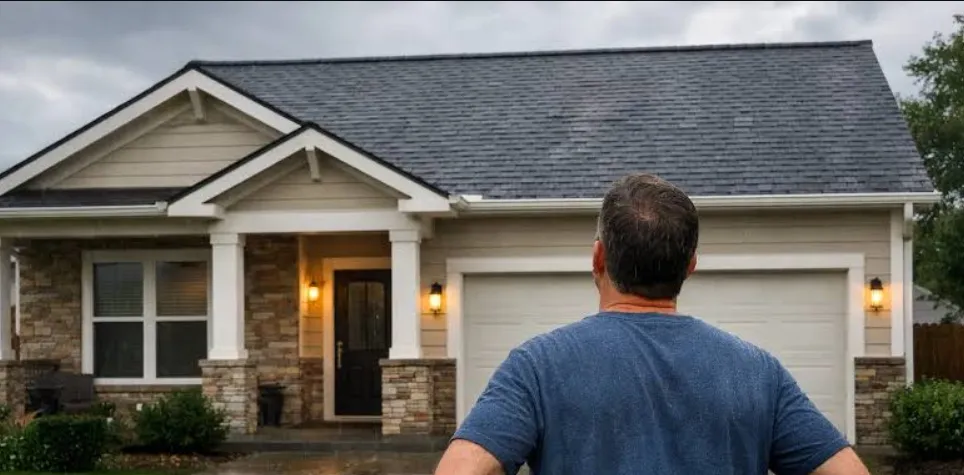
A steady 60 mph gust can strip shingles off a roof in under a minute, and a house sitting on an exposed hilltop catches wind the sheltered valleys never feel. That is the situation a Connecticut homeowner faces in the first 48 hours after a spring nor’easter, staring up at missing shingles and lifted tabs while water quietly works its way toward the ceiling. The argument here is blunt, and it runs through every step below. Move on the repair and the insurance paperwork at the same time, or you lose money on both. Before either gets worse, the homeowners who come out ahead are the ones who call in the kind of roofers Southbury CT residents rely on and start documenting the damage that same day.
Wind Speed Decides How Much Damage Hides
Wind damage is rarely the neat bare patch you can spot from the driveway. The failure we see most often is a lifted tab three rows up that looks fine on Sunday and drips through the kitchen light by the next hard rain. Once a shingle’s edge breaks its factory seal, wind uplift takes over, which is what roofers call the suction that peels a shingle up and back before it tears away for good. That single hidden failure point is why a roof that looks intact from the yard can still be leaking behind the drywall.
This past winter made hidden damage more likely, not less. NOAA’s National Centers for Environmental Information reported February 2026 as the fourth-warmest and fifth-driest February on record for the Lower 48, averaging 40.4 degrees, roughly 6.6 degrees above the twentieth-century norm. Roofs that swung between mild afternoons and sudden hard cold all season came into spring with brittle seals already half-broken. A warm, quiet stretch like that lulls homeowners into skipping a roof check right before the spring wind arrives to find every weak seam.
Check These Six Spots Before Calling Anyone
Before you dial anyone, walk the perimeter and look up with a clear head. Start at the ridge, where wind pressure runs highest, then scan the field of the roof for shingles sitting slightly proud of their neighbors. Check the valleys where two slopes meet, the flashing around the chimney and vents, the gutters for granules and torn shingle fragments, and the soffit and fascia for lifted edges. Do not climb a wet or steep roof yourself, because most of what you need is visible from a ladder at the eave or from the ground with binoculars. Six spots. Each one tells a different part of the story.
The attic tells you more than the exterior after a windy night. Bring a flashlight up (a headlamp keeps both your hands free) and look for daylight at the peak, damp insulation, or water stains tracking down a rafter. A stain the size of a dinner plate usually means the leak started well before you ever noticed it downstairs.
Document Everything Your Insurer Will Demand
Insurance adjusters reward the homeowner who builds the file before the tarp goes up. Photograph every angle from the ground first, then the same spots up close if you can reach them safely, and shoot a short video that says the date out loud and shows what you are seeing. Timestamped photos matter, because a claim filed weeks later invites the question of what actually happened that night. Save the weather report for the storm, note the peak gust if a nearby station recorded it, and keep receipts for any emergency work you pay for. The stronger your record, the less room an adjuster has to argue the damage was slow wear rather than one violent night.
Questions To Ask Before Signing A Repair
A storm brings out contractors you have never heard of, a few of them chasing the claim more than the roof. Before you sign, make the crew prove they will replace what blew off with something at least as tough. The Asphalt Roofing Manufacturers Association spells out the impact and wind standards a storm-country covering should meet, where the UL 2218 test drops steel balls from 12 to 20 feet, Class 4 marks the highest impact rating, and ASTM D7158 Class H is the top wind rating.
- Are the replacement shingles rated UL 2218 Class 4, or something lower to pad the margin? A good answer names the class without dodging.
- Will you pull the permit and handle the town inspection, or is that on me? The right answer is that the crew handles both.
- What does your workmanship warranty cover, and for how many years? Look for a written term, not a handshake.
- Can you document the damage in a way my insurer will accept? A good crew already shoots photos and writes a clear scope.
Temporary Fixes That Prevent A Bigger Claim
A roof does not have to be pretty to be watertight for a week. A properly weighted tarp, run up over the ridge and fastened to sound decking, buys the time to book a real repair before the ceiling below is soaked through. Just do not let that tarp pond water or trap a load of wet snow, because a roof carries hard limits. The University of Minnesota Extension puts the design threshold in plain numbers, noting a 20 psf roof handles roughly four feet of dry snow or two feet of wet, heavy snow before it overloads.
A twenty dollar tarp installed right can save a five figure claim. Skip it and the water keeps working while the paperwork stalls.
Fast Repair Protects The Claim And The House
Speed is the whole game in those first two days. The roofers Southbury CT homeowners call after a nor’easter earn their keep by stopping the water and building the claim file at once, so the repair holds and the coverage does too. The house that dries out and the claim that pays are almost always the same house, handled by an owner who did not wait. Move fast on both fronts, and a violent night turns into a line item instead of a full gut renovation.
