
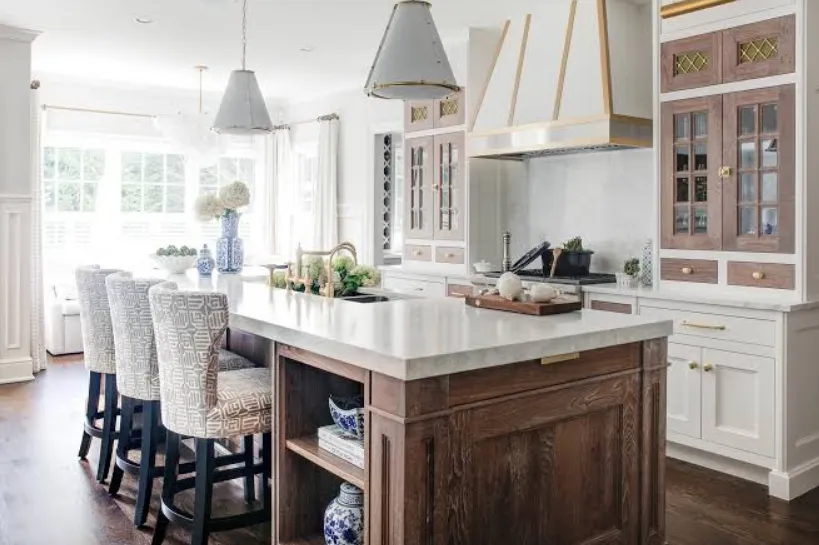
The lowest of three kitchen bids is almost never the one that saves you money. A first-time remodeler in Waynesville, staring at three quotes that land thousands of dollars apart on the same roughly $30,000 job, has almost no way to see which crew priced the work honestly and which one quietly left the expensive parts out. The honest path through that spread is not a secret number, it is a short list of questions, and any crew worth hiring for kitchen remodeling Waynesville NC will answer every one of them without flinching. That is the whole argument here: the questions you ask, and how straight the answers come back, reveal more about a remodeler than any line on the estimate ever will. Price is the loudest signal you get, and the least reliable.
Cheap Bids Hide Expensive Corners
Cutting a kitchen bid to the bone means cutting something real, and it is rarely the contractor’s own profit. The case we see most often is a low number built on vague line items, thin material allowances, and a quiet assumption that you will never think to pull the permit file. A rock-bottom bid works a lot like a cut-rate insurance policy. The premium looks fantastic right up until you file a claim and finally read the exclusions. On a $30,000 kitchen the corners hide in the same few places nearly every time, whether that is cabinets swapped down to bargain particleboard, the wiring handed to a general laborer instead of a licensed electrician, or the permit skipped to save a week and a few hundred dollars up front.
Say the spread runs from a $23,000 low to a $33,000 high on that same room. The gap is usually not the top bidder padding the number for fun. Nine times out of ten it is the low bidder leaving demolition surprises, permit fees, and the finish carpentry off the written page, exactly where you will run into all three again as a change order halfway through the job. A bid that reads clean and short is not a bargain. It is a bill you have not been shown yet.
The Questions a Good Remodeler Welcomes
A remodeler who actually wants your trust does not get twitchy when you ask hard questions. They expect them. The crews that stall, deflect, or answer a pricing question with a friendly story are telling you something real before the first cabinet ever comes off the wall. Ask the four below, and listen less to the words than to whether a specific number shows up in the reply.
- Which permits does this job need, and are they in your bid or billed to me later? A good answer names the permit and says who pulls it.
- What is the written allowance for cabinets and countertops, and what happens if I go over it? A good answer is a dollar figure, not a shrug.
- Who is actually on my crew, and are they your employees or day labor you lined up last week?
- How do you prep and seal exposed wood and trim before it sits on the job site for weeks?
Pay close attention to how a bidder talks about finishing, because fast crews quietly borrow against your future right there. The USDA Forest Products Laboratory found that exterior wood left to weather 16 weeks before painting failed within 3 years, while identical boards painted right away held their finish for 13 years. The same math governs trim, exposed cabinetry, and any wood that waits around a job site, so seal it promptly or pay for it twice.
Warranties Reveal Who Stands Behind Work
A warranty is a contractor betting their own money that the work will last, so read closely what they are actually willing to bet. A five-year written warranty on labor means the crew expects to still be in business, and still standing behind your kitchen, long after the final invoice clears. Read whether it covers labor, materials, or both, and for how long, because a one-year warranty on materials alone is close to no warranty at all on the parts that actually fail. Verbal promises cost nothing to make and nothing to break. In practice the honest outfits put the coverage on paper without being asked, and they will tell you plainly what it leaves out.
A handshake warranty is not worth the air it is spoken into. Get it in writing, with a stated term and a signature, before a single deposit changes hands.
Vet the Contractor Before the Kitchen
The kitchen itself is the easy part to picture. It is tempting to spend the whole process arguing about quartz colors and cabinet door styles, and honestly those choices are the fun of the project. None of that survives a crew that vanishes in year two. A ten-minute check with the state licensing board, plus one honest phone call to a homeowner whose kitchen is a year old, will tell you more than any stack of glossy before-and-after photos. Before you hand anyone a deposit for kitchen remodeling Waynesville NC, run the license number, call two clients from last year, and confirm the warranty and every permit are written into the contract. The stakes here are not abstract, because according to CNBC, a March 2026 Clever Real Estate analysis put the average American homeowner’s spending at $23,686 a year on costs beyond the mortgage, so dollars poured into a remodel that has to be torn out and redone are dollars you were never getting back. Pick the crew that welcomes the questions, and the cheapest honest bid tends to sort itself out.
